WHAT IS A COMBINED SEWER OVERFLOW FACILITY (CSO)?
Understanding Atlanta’s sewage pollution requires understanding how a Combined Sewer System (CSS) works. Watch this PBS Video on CSS to learn more.
WATCH: PBS Video on Combined Sewers
The headwaters of Intrenchment Creek, the South River’s largest urban tributary, start in downtown Atlanta, winding southeast through once thriving African American communities at the heart of the city. These communities experience persistent flooding, combined sewer spills, and CSO overflow events that negatively impact the environment and quality of life for residents of the Peoplestown, Summerhill, Mechanicsville, and other southeast Atlanta communities.
ATLANTA’S CUSTER AVE CSO FACILITY ON INTRENCHMENT CREEK
The Custer Avenue CSO (780 Custer Ave SE/855 Sloan Cir SE) was built in the mid ‘80s as part of the East Area Combined Sewer System (CSS), along with the East Area Intrenchment Creek Water Quality Control Facility (WQCF), which collects both stormwater runoff and sanitary sewage in a single set of pipes. The CSO functions by diverting combined stormwater and sewage to a treatment plant. During rain events, CSO overflow events enter into Intrenchment Creek. This has led to historic and ongoing violations of the Clean Water Act, contributing to water degradation and ecological harm.
How the CSO facility overflows, degrades water quality, and violates the Clean Water Act: Overflows are a designed feature of older combined sewer systems to prevent backups into homes and businesses during major storm events. The discharge of raw or partially treated sewage during CSO events significantly degrades the water quality of Intrenchment Creek. Atlanta has a long history of violations related to its combined sewer system, including the Custer Avenue facility, resulting in federal oversight via it’s 1998 Consent Decree.
Learn more about the Custer Ave CSO
• • •
THE FLOODING & POLLUTING OF SE ATLANTA NEIGHBORHOODS
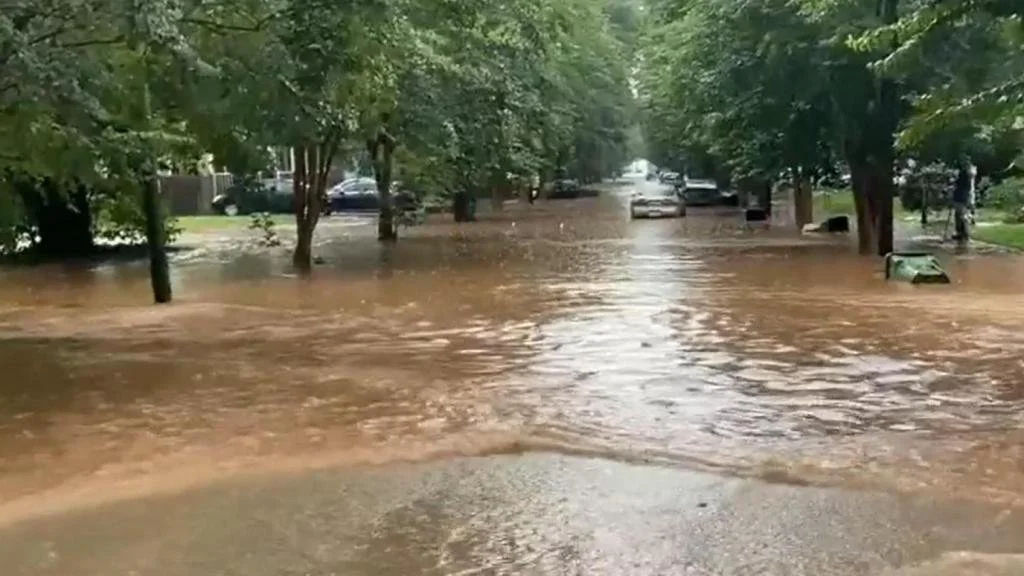
Peoplestown flood event, 2022. Image credit: Rough Draft Atlanta
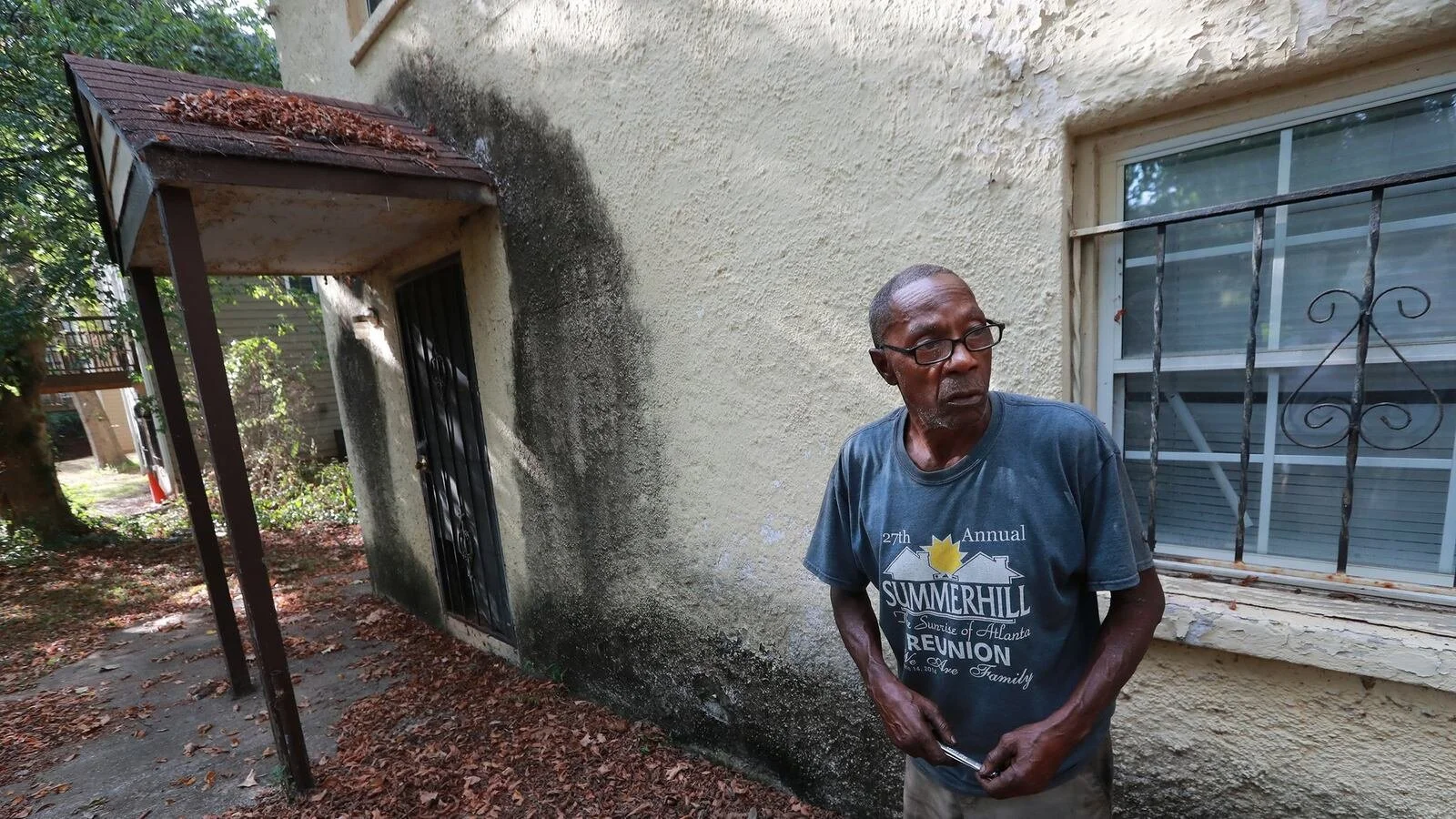
Perry Holloway at his flooded residence on South Avenue, 2019. Image credit: Curtis Compton
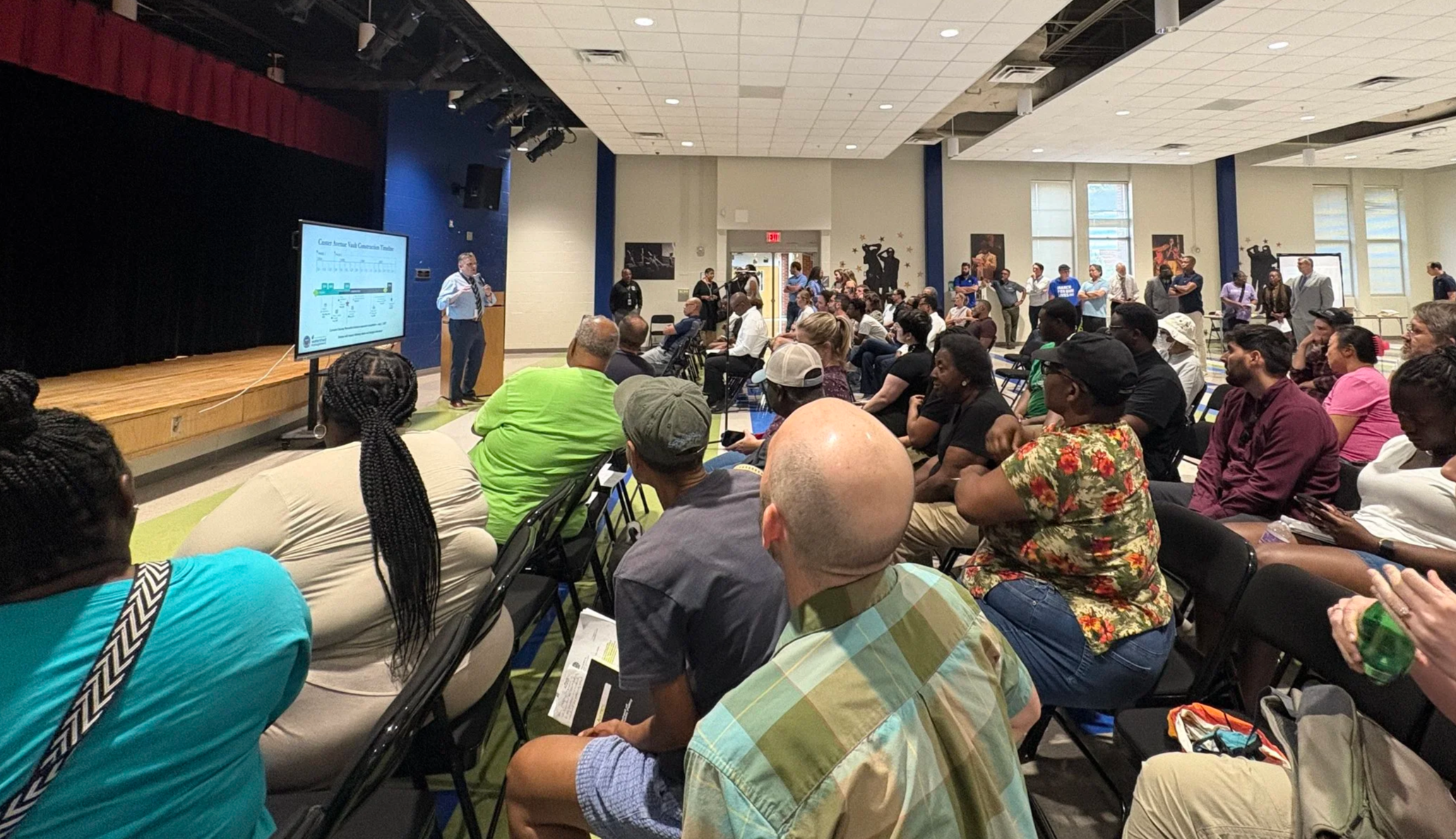
Atlanta’s incoming Director of Watershed, Greg Eyerly, addresses concerned citizens. Peoplestown, June 2025.
Peoplestown Flooding: Who Pays, Who Benefits
In the wake of the Atlanta Braves’ exodus (2016) and the purchase of the stadium and associated parking lots by Georgia State University and developer Carter USA, the City of Atlanta has failed miserably in its responsibility to require these and other upstream landowners, namely, Atlanta Public Schools, to effectively manage development and re-development stormwater impacts that are the source of combined sewage flooding in the Peoplestown community.
Atlanta’s “solution”? Custer Avenue Capacity Relief Multi-Benefit Project
A proposed park, dubbed by residents as the Peoplestown “Poop Park”, retrofitted to accommodate a 20-million-gallon vault to hold untreated sewage and stormwater under a grass lawn is Atlanta’s so-called solution. The proposed project is as offensive as the name, negatively impacting all measures of community well-being – quality of life, environmental health, and economic security.
Based on calculations for the sewer-shed, a 2,700 Million Gallons per Day (MGD) treatment capacity at the Custer Ave facility would substantially reduce Combined Sewer Overflow (CSO) events at the facility. The proposed vault will hold 12-24 million gallons, a fraction of the quantity needed to meaningfully reduce or eliminate community flooding, downstream flooding, or CSO events.
The 12 to 24-million-gallon combined sewage vault, now estimated to cost $156,519,692, more than a two-fold increase over the original estimate of $72,000,000, is currently under construction in Peoplestown. The vault will not stop combined sewage from inundating surrounding homes, yards, and streets. It will not stop violations of the city’s federal Clean Water Act permit at the Custer Avenue Combined Sewage Overflow Facility. It will ensure that combined sewage flooding become a permanent source of community degradation.
This project is the path of least resistance. Unlike wealthy and politically connected upstream businesses and property owners, that rightfully should be a part of the solution, the residents of Peoplestown are virtually powerless to stop this destructive project. Peoplestown deserves the same community enhancing equitable and just solution the city provided Old Fourth Ward and Vine City residents. It is not to late to do the right thing. Consider writing Atlanta leadership and see SRWA's letter to Judge Thomas Thrash.
In 2020, the Intrenchment Creek One Water Task Force produced a report – Advancing Equity and Addressing Flooding and Combined Sewer Spills in the Heart of Atlanta detailing what real solutions could look like.
For more information and to get involved, go to IntrenchmentATL.com and contact: IntrenchmentATL@gmail.com, Contact@intrenchmentatl.com